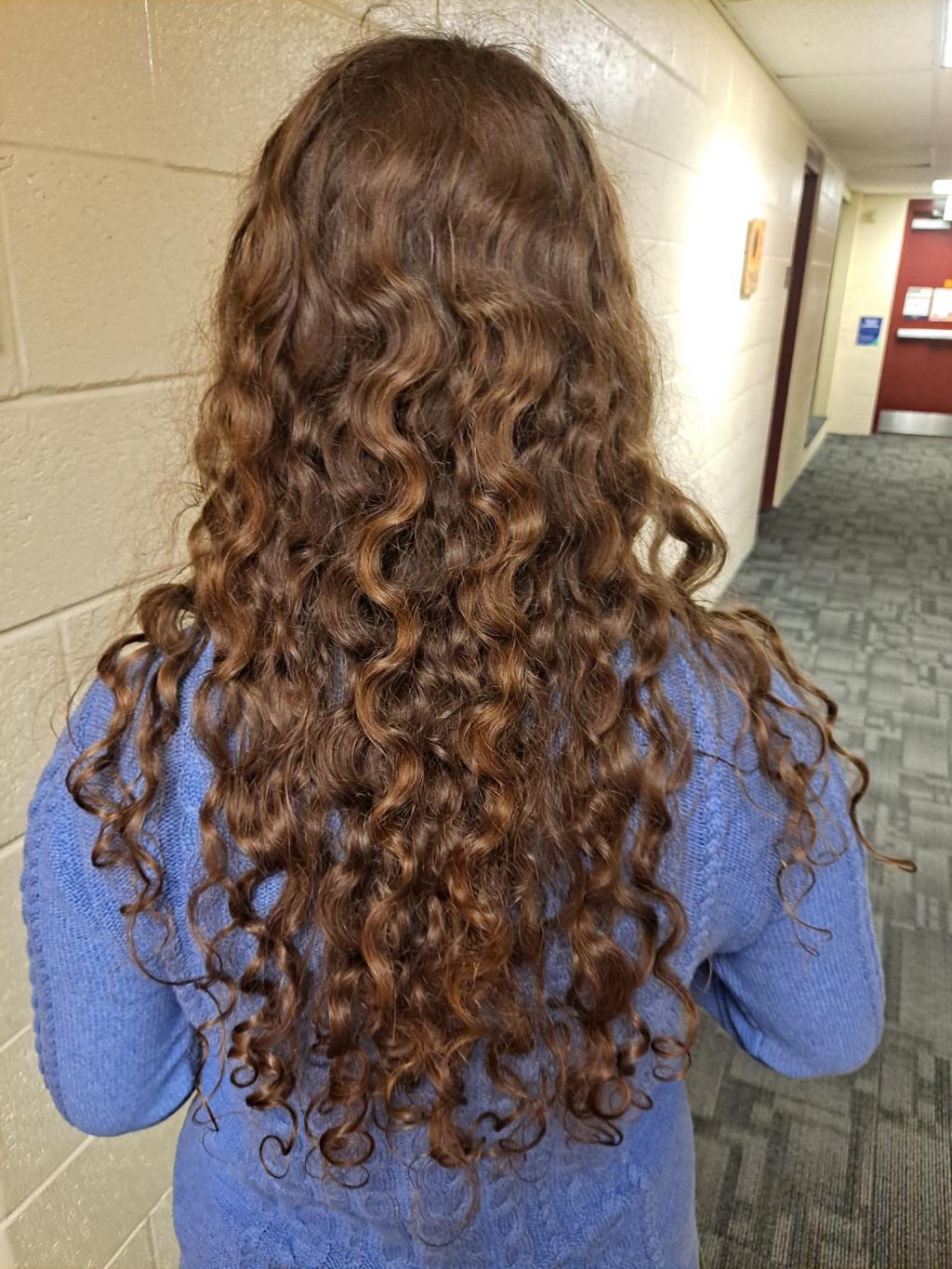
I’m sure you’ve seen and heard it all before…. the shampoos that promise fresh clean locks, the conditioners that claim to “repair” bleach damage, the serums that tell you you’re missing something without their scientific results, or the masks that seem to work for a while but end up feeling messy and like a waste of time.
I actually found that all of those products were counterproductive to my goal of long hair. Kind of ironic, right? They advertise that using their products will get you the results you want, but instead it felt backward. The unfortunate reality is, most (not all) beauty brands are designed so that you have to keep coming back for more, like a dependency. While I do not at all recommend dropping any sense of cleanliness or hygiene, I will say that modern western hygiene seems to have forgotten the methods that women have been using forever, and to their success.
If you look up photos of long-haired women on the internet, have you noticed that many of them are from Scandinavian, Eastern Block, and Asian cultures? It’s not because women in the West don’t want long healthy hair–they most certainly do! It’s just because in the West there are expectations for what cleanliness looks like or how to avoid smelling bad, that is unnecessary or counterproductive. Often the media will hype just one recipe from those cultures (rice-protein water, anyone?) but without looking at the whole picture (how often they wash, whether they keep their hair up or down, and what they eat).
Let’s break things down just a little bit so that you can better understand what you are hearing when you watch interviews of women around the world and why they, myself, and even you, can get Rapunzel-length hair.
How Often Do I Shower?
Everyone is different, but the sweet spot seems to be about every 7 to 14 days between washes, sometimes longer. This is because the scalp, and your hair, weren’t meant to be stripped of all oil.
Excess oil is an issue for looks, but no oil is worse because it removes your body’s own nourishment for your hair. It makes sense then that going longer between showers better accommodates your hair’s needs. After a few weeks of doing this my scalp produced less and less oil on its own and it stabilized. Turns out I don’t naturally have a greasy scalp, who knew?
I find I can rinse my pits every few days, reapplying my Thai salt deodorant, but that I don’t need to get my head wet until about day 10 or so at the soonest.
How Do I Get Between Showers?
I use a hair powder that’s a mix of rice powder, corn starch and other grains (no arrowroot–it shouldn’t ever get pasty! I’m looking at you, Kitsch.). This powder grabs on to oils on my scalp and removes excess but while letting my scalp still keep a little for its own health and the hair’s protection.
I often see reviews online for hair powders (sometimes mistakenly branded as dry shampoos or powder shampoos, which are not the same as each other) where people complain about the texture or how it makes their hair just look greasy, or simply didn’t work for them. It is just as important to know how to use something as it is what to use.
While the whole process is outside the scope of this article, I’ll mention that you apply very little at first and, after massaging it in properly, it has to be combed and brushed out. Otherwise you get buildup or it can feel “gross”. You can leave some in for a few days, but it is best to remove any amount you first put in your hair before going back for seconds, also in small amounts. Less is more.
Note: some aerosol, dry, and powder shampoos are only made to extend time between showers, and are still expecting you to go back to using normal shampoo. I personally avoid these because that is not my goal. As I will mention below, I am avoiding the use of shampoo and so I use just a powder that is capable of keeping my hair non-greasy for a minimum of 10-12 days.
What Do You Wash Your Hair With, Then?
At first I would try to dilute my shampoo and use that mix directly on the roots of my hair. While that definitely lessened the issue of hair dryness, it still was a problem because its stripping action pulled oil not just from my scalp but also from inside my follicles, causing my scalp to panic and start overproducing oil. That’s when I decided I needed something to help me manage oil between my showers, and I began experimenting with different hair powders until I found one that served the role I needed.
That still leaves the question of what I use -inside- the shower. Well…. nothing! Turns out that if you let your scalp stabilize, and gently manage any oil with hair powder outside the shower, all you need is a thorough rinse and massage while showering. People tell me they’d never know the difference–because I don’t stink. My hair powders also have natural coconut and vanilla scent in them, so that even after I rinse I have a light, pleasant scent that makes it seem like I’ve used soap.
You might be wondering, “has she had hair fall?”, “does it itch?”, “how effective is that actually?”. With this biggest change of ditching modern shampoo, using powder, and extending time between rinses, I’ve had the lowest oil production, lowest hair shedding, lowest itching (none), and lightest natural body scent in my whole life. My scalp also breathes really well and I don’t get clogged follicles. Honestly, the sheer improvement all of this brought left me stunned. It even alleviated my historically always-dry skin; I now barely touch my lotions because I’m no longer stripping my skin.
What Do I Brush My Hair With?
I have a three piece wooden comb set for detangling and for combing powder through and out of my hair. Sometime soon I will write about how to do this, and how to properly clean your combs.
I also use two boars-hair bristle brushes, one in a black firm bristle and another in a soft tan bristle. Because my hair is dense but fine, the black bristle brush gets buildup out of my hair and helps to stimulate my scalp (though I don’t use this to detangle). I then use the lighter bristle brush as a finishing brush to help smooth the hair shafts down and bring out their softness and shine. Both brushes share in each others’ capabilities, but I find I get the best results when using the brushes as such. I will also write a post about my brushes and how to use them and how they differ from modern detangling brushes.
How Do I Protect My Hair’s Length?
Assuming your hair is long enough to pull back, best practice is to keep your hair collected with itself and up and away from any sources of friction. Backpacks, purses, clothing, seatbelts, pets, and even other people (well meaning hugs or curious hands) are all sources of friction I’ve found rough up my hair or cause it to break. So, this ends up being a great excuse to wear beautiful Dutch, French, Milkmaid, or Twist braids 😀 At night I keep my hair in a satin or silk bonnet and I also use a satin or silk pillowcase (frankly, I also just love how it feels on my face).
If your hair is only a few inches long, it is already up and away from all of that 🙂 The bonnet is still a good idea at night (also doubles as protection against headphones while studying).
Regardless of the length, I have found it is also important to protect your hair from sunlight. I know for my hair, the more sun it gets the more damaged it acts. To solve this and to protect my whole body, I often wear a Hemlock wide brim hat (no problem in windy weather!) and Coolibar slacks and jacket, with sunglasses. I don’t get sunburn anymore and it means I can still enjoy sunny days without risking nuking my hair. Plus, all those nutrients that would be spent counteracting sun damage can instead go toward further health, and you aren’t getting all that nasty inflammation. I do the clothing and hat because it is a lot less expensive than wearing sunscreen every day for years. It also means I don’t have to clog my pores or have to use soap to wash it off.
The Internal Essentials
Something else that has also REALLY made a difference was having access to a healthy diet. I didn’t have that growing up, but now I do and I have noticed a major change in how my body functions.
Unless you have a deficiency in something, you really don’t need all those multivitamin supplements or vitamin hair gummies. Instead, your body might be missing the basic building blocks. If I can make an analogy here, the situation a lot of women face is like they are trying to build a house and they have the expensive furniture and kitchen countertops but without enough wood to build the floor, walls, or foundation. Sounds awful, but it doesn’t have to be that way. Just some things to keep in mind that have made major improvements for me:
- Eating enough fiber and protein. The fiber helps keep you feeling comfortably full and allows your body to process what you are eating. The protein gives your hair, which is made of protein, the bricks it needs to build that house. Try getting a minimum of 20 to 25 grams of protein each meal, 60 to 75 grams a day, to maintain your health. And you should be aiming for 17-34 grams of fiber a day, though no worries if you want to do more. You won’t experience hair improvement for the first month, but fingernails, skin, and joints will start to feel better already. Eating fiber and protein also helps you to not go overboard on carbs or sugars, which can help reduce inflammation.
- Drinking lots of water. It can be easy to underestimate how important water is to your health, but its insanely crucial. Something that helps with this is if you like to make soups, or if you like tea or adding a fiber powder to your water. This also just means you don’t get those headaches as much and the brain fog goes away. For hair it is particularly important because your blood needs volume to carry nutrients properly and so that your scalp gets good circulation.
- Collagen. This sort of overlaps with the protein, but I’ve noticed that eating it regularly is something my body just loves. My joints and spine feel super smooth and its like it is what I would experience years ago the rare times I was able to get whole trout; after gutting and cooking it I’d eat literally everything but the bones (jaw muscle has the best flavor, btw). Taking this has also helped my skin retain its moisture and become more smooth.
- Eating a Well Rounded Diet. This is something I would also like to dedicate a whole post to, because there can be a lot of uncertainty around what it means to eat healthy or what is actually bad or good for you. For now I’ll say that lots of veggies, lean protein, garlic, ginger, chili peppers, olive oil, quinoa, and the like are perfect for this. And no need to skimp, just eat until full.
- MSM. Yes, I too was a skeptic! But then I looked up how essential biologically available sulfur is to the human body, and let me tell you I was floored. No wonder I had craved garlic, broccoli, onion, and eggs so desperately growing up! (I was that kid who would eat a whole plate of raw onion–I maybe still do something like that 😉 , just, without feeling that awful deficiency craving. It’s now just for the flavor). While I said I don’t really believe in vitamin supplements (unless there’s a deficiency and your body needs some TLC to get back to health), this -mineral- supplement is a must. My body seems to ask for it every morning and I’ve definitely noticed an improvement; it’s allowed my body to integrate all the above things in my diet and use them effectively for my health.
I now have so many baby hairs growing in and -staying- in, with little shedding and strong roots! The hairs also feel moisturized, smooth, and springy, and with the haircare techniques at the top of the post I’ve been able to retain the length that grows in. This is so much better than the dry, thin hair that I had had all those years ago, even though I had already once gotten it past 30 inches.
Healthy Mindset and a Big Haircut!
Something else I also want to mention is the mindset. First and foremost, the goal isn’t for long hair. Sounds like I am contradicting myself here, but the truth is, the focus is actually on hair -quality-. If you can get strong hair that you know how to protect, it will get long on its own.
I also consider my hair to be a very part of my body and an extension of it, rather than as an extra fashion accessory. This has helped me to take care of it in a way that values the health of the hair and my own bodily health. In other words, I don’t grow it to impress others (but I appreciate the compliments!). Because it is just as much “me” as my heart and lungs and liver, I want to listen to its needs and not make it conform to standards it was never capable of meeting.
Now, that doesn’t mean I’ve never experimented with short hair; I recently chopped it all off! XD I know many people have struggled to understand why I would reduce it to a few inches when so many struggle to get it longer than that. For me, it is because I wanted a fresh start and because I enjoy the journey. Do I miss my long hair? Absolutely!! But I have much healthier hair growing in with no damage to mess with, and that’s made it so much easier to care for.
I want to document the journey so that you can see that it really is possible to start from super short hair and get it all the way down to the floor. I also want to show you how to care for it as it grows and how to retain all the length that does grow, even if it feels like it’s taking forever! [In case you are wondering this photo was of my hair several years ago back when I wanted to try out medium length hair; my hair is healthier than even that now!]
Thank you so much for reading this far, it means a lot! Enjoy your day 🙂

 Natalie's Hair, Horses and Harps
Leave a comment