When my monthly comes, I’ve learned I have to make a few adjustments to what I normally do. This is because my body tends to act up during this time, with cramping, irritability, and notably more scalp oil. It is annoying but I’ve found a way around the oil issue by maybe rinsing a little more often, but still not using shampoo because that would only exacerbate the problem.
Hair powder works to absorb excess oil without striping your scalp. A lot of powders currently available also have rice powder mixed in to give volume, which is an added plus. The key when experiencing oiliness (during your period, or when you are first transitioning away from shampoos and your scalp hasn’t stabilized yet) is to refrain from adding more powder than normal. It can be hard to resist the urge to just shake more into your palm or along your hairline. Surely more oil requires more powder, right?
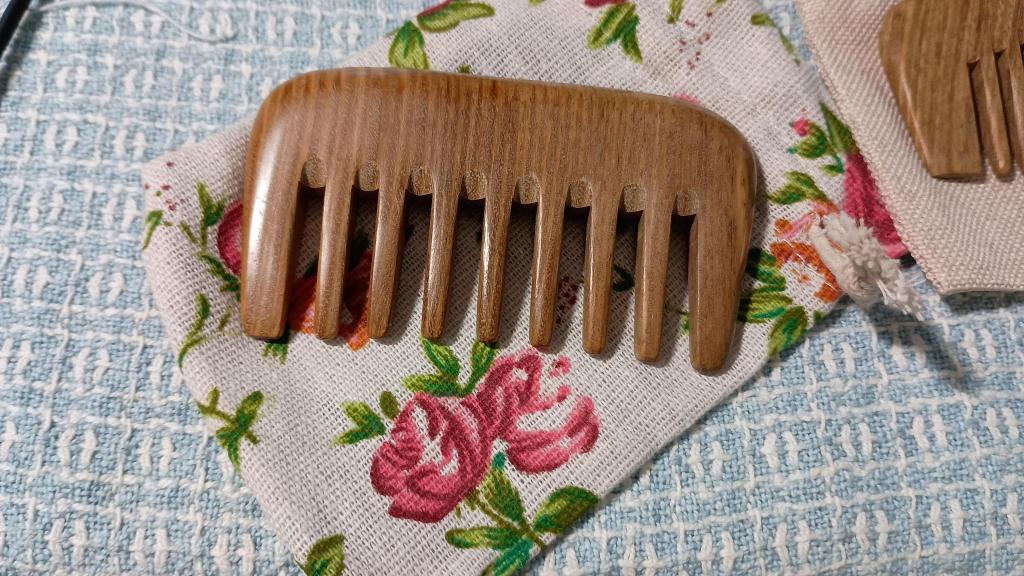
For the least ick-factor and most effectiveness, just powder as you normally would (a little goes a surprisingly long way) and massage it around the roots of your hair. Let it sit for a few minutes, periodically massaging it into any areas, and then -completely- comb it out. Only then if you still have some oily patches, should you go for round two, and combing it all out again.
There was a time when I first tried incorporating hair powder into my routine that I just went nilly-willy and applied it in a way I felt was proportional to the greasiness. Boy was I wrong–old powder got trapped along the scalp and freshly applied powder couldn’t get down far enough to grab more oil. Combing any of it out was a challenge (not to mention my combs got disgusting).
The other issue I had had at the time was my first powder that I tried was a brand that had incorporated arrowroot powder. It was an ingredient that I had already been enjoying in my deodorant paste, an application incredibly well suited for the arrowroot. However, hair powder isn’t meant to be pasty. I see brands that advertise its use as something to improve oil absorption, but what they fail to realize is that powder needs to be dry and unfazed by humidity so that it doesn’t clump and cling to everything. User error compounded poor product design.
Always get a hair powder that uses corn and/or rice as the main ingredients, and roots that aren’t known to get pasty. It might feel like the powder isn’t grabbing onto much, but that’s exactly how you want it to work. Several light passes on your scalp with the powder, combs and brushes, and your hair will feel (and smell) like new. My second attempt at a hair powder turned out to be a great choice and at the time of writing this I have gone over a month without needing to use shampoo; the oil and smell have pretty much vanished. I admit I have also been enjoying the feeling of self sufficiency this has brought. Whether I can continue purchasing the brand I currently use, or if I eventually buy raw flours and powders to make my own, I’ll be well set.
Deodorant definitely has to be applied a little more often during my period than I otherwise would, but even this has gone really well as the result of my new food choices and because I haven’t been regularly striping my skin and pits. The natural oils and microbiome of your skin can actually regulate themselves very well. This period has been one of several of the least painful I’ve ever had. Likewise, this time around I didn’t develop that mild funk scent that I’ve historically come to expect. The bottom line has been to do my hair powdering a little more frequently but in the same amounts each time as always. It apparently really can be that simple. I know I wasn’t expecting that when I first got into this.
More posts will be on the way, including ones about the actual process I’ve learned for grooming my hair and scalp (for both short hair and long hair, for anyone whose interested). Thanks for reading this far and joining me today! 🙂

 Natalie's Hair, Horses and Harps
Leave a comment