If meant to be rinsed with water, it’s probably not for me. If kept to a dry routine that’s combed out, looks ok. Here’s why.
(Read till the end for my updated hair powder recipe)
Any method you chose will come with its downsides, no matter what you pick, and while some downsides should be avoided at all costs if you want to have floor-length hair, others are annoying at most and are manageable. This is what I’ve learned from using modern shampoos and traditional methods. Both have their pros and cons and it’s a matter of what matters to you most.
Most modern shampoos strip the oil and zap my already dry, fine hair, requiring any conditioners I try to work overtime to get all that moisture back into the hair. I’m not saying this from copy-pasting the internet; I have way too much first-hand experience with the horrors of this, and it had left my long hair from years ago unhealthy, despite just how long it had gotten. It was demoralizing. By the way, if you want to see what that looked like, go back to my first couple of posts and I show photos of what that looked like. My skin is the same way, it cannot stand soap of any kind, period, or it’s dry and needs a bunch of lotion. My face and lips, same thing. So when I tried looking for other ways of getting clean without the dryness problem, or avoiding bathing altogether (that’s a story in and of itself), I was happy to find traditional methods of hair powders using powdered plants and clays.
Traditional haircare, on the other hand, has its own downsides, notably being odd hair textures or higher upfront “costs” (time, skill, experimentation, prep). This can also mean residues that, while not damaging and can solve a lack of volume, may be hard to get used to. Still, sometimes the residues are intentional and needed, like those that are waxy that I find seal my hair and skin from dryness. If you are willing to try something new and different, you can indeed get high quality hair. Trying something different is why you stopped using the modern soaps, after all.
The thing is, it can be tricky knowing what kinds of plants and clays to use if a) you are learning it for the first time, and b) you’re using resources by other women who have hair texture different from yours. Seeing it took Katherine Haircare several years to figure out just the clay wash for her own unique and lovely hair, I went into things knowing for certain I wouldn’t get great results for a while. However, I also knew that by the way clay washing works that even if I was left with a bunch of residue in my hair, that the hair would not have been destroyed by that mistake. Although, not getting it all out can feel scary the first few times it happens, as the residue tricks your fingers’ ability to tell if the stiffness and dryness is actually your hair or is just the clay coating them. Very fortunately, it often was just the latter.
For the past year I’ve been documenting my journey back to super long hair and it goes only as fast as the hair grows, not surprisingly. I started this blog in September of 2025, which means I’ve been at it for about 12 months now. Seeing that number on the page just surprised me, to be honest. I didn’t realize it’s been that long! At the time of initially drafting this post I was 7 months into the journey and I cold already stretch out the waves in my hair to be the length of my hand, and had grown 3 inches since the original 2.5 in estimate (the result of both growth and search-and-destroy trims). Now at 12 months its starting to touch the back of my neck and shoulders. Yay!
During this time I’ve been getting lots of exercise, with repeated going up and down ladders, hauling racks of plants, lifting and loading mulch and soil and rocks into people’s cars (sometimes 50 at a time, hand-stacked), and wrangling 200+ feet of hose, all of this 5 times a week. Besides the obvious of increased bloodflow to the scalp, it’s also helped keep me more fit. (FYI, I eat frozen veggies, dumplings, chicken, fish, eggs, beans, and lentils as the bulk of my diet, with the occasional bag of popcorn or two). …. (ok, more than occasional XD).
As an aside, it’s also been great opportunity for me to wear my Coolibar UPF 50 clothing (lightweight hoodie, jogger slacks, gloves), Hemlock hat (lifeguard version with straw build and wide, UPF 50 brim), and Babo Botanicals mineral sunblock SPF 50 sticks (which do more than prevent sundamage, they also help to seal up my skin and keep it moisturized, a true godsend).
The fabric is low-friction and tough as heck, so it holds up to the job super well all the while preventing any friction damage to my hair, which is kept up in a tiny ponytail. This is secured with a nylon band and is kept loosely, and it only secures the hair that would fall over the nape of my neck. Even when my hair gets to be very long, I will only braid back or tie back my hair in the same way, intentionally leaving out the front hairline from the style so as to protect it from thinning. It is also impractical to not keep them separate considering how my “side hairs” will tend to untuck themselves in the wind. My hat also protects the hair from doing this, keeping the hair tangle-free as much as it is for keeping sun off of my face, neck, and scalp. I’ve also read that UV-B accelerates hair loss as you age, or may be responsible for it directly in the absence of a nutritional deficiency (kind of like with photo-aging, it makes you look 20 years older than you actually are).
With how I currently dress and cover up, my body has been able to regulate itself better, leading to the lowest oil production in my life. So I end up having to semi-regularly oil my hair with jojoba. Now, this isn’t to say I haven’t used shampoo anymore. Yes, I still have been using solid bar soaps, albeit very gentle ones and on occasion, during the slow transition. If you are curious to see what they are, you can check here https://www.amazon.com/hz/wishlist/ls/325COKUJTHEJL.
All of this exercise and change in scalp oil production has led to an interesting situation when using clays. My hair and skin have always been prone to dryness, and often overcompensation with oil, hence dry yet greasy. While I’m not using things that dry out the hair anymore, I still need to make sure that my hair gets back what it needs when it’s low. Clay doesn’t strip the hair, but it can be a bit too strong if the wrong clay is used.
I admittedly did a beginner mistake and used Bentonite instead of Rhassoul or Kaolin when making my own clay hair powder recipe–you can still see that mistake in the original post. Still, even knowing my mistakes and moving forward with the fixes, I’ve found clay washing when using water to be difficult. Not to mention, if you don’t use a mixing bowl or bucket under your head, it can risk clogging the drain over time (a few times won’t do this if you do it correctly, the amount of clay in the rinse mixture should be quite runny and minimal).
Kaolin is what’s in the pre made hair powder I regularly used in 2025, and which had been part of my no-water routine. In 2026 I have entirely switched to my own hair recipe, albeit clayless. I’ve gone no-water because with how fine my hairtype is, I find I struggle with making a rinse solution where it doesnt get full of buildup. And since my scalp now doesnt produce much oil, I dont’ see why I’d now need to use something so effective. Again,clay does not strip your scalp, but if you tend to be on the low-oil side anyways, this may be too much as you want that little bit of oil.
That said, I am just sticking to using a dry powder and combing routine to clean my hair. It’s a mechanical method that you already see in traditional techniques, often just by itself for smoothing and detangling but also alongside cornstarch -based powders for extending time between baths. Note: Always use combs and brushes that are clean; see my list for the little black brush cleaner, it works for combs too.
I have found that if I use just a little bit of powder and comb it out all the way, not leaving much to any on my scalp, by the time I do need a rinse to remove sweat or mulch powder or dirt or deep-shelf dust (anyone working in home-improvement retail knows what this last one is, it’s awful), I don’t have any problems because there isn’t any clay or powder to get gunky under the shower. As soon as there is any leftover clay, though, whether left there by forgetting to comb enough, or intentional introduction for a clay-wash rinse, it’s very difficult to get out of the hair without vinegar, something I’ve also not been successful at using.
Do I think I could eventually get this to work? Sure, I could, eventually. However, I find combing out dry powder more preferable, as time-intensive as that may be upfront. Unlike the clay rinse, I know I can get it all out of my hair with the method I have, and I’ve had the best success mechanically cleaning my hair with combs and brushes and powders, so I think going forward this is what I’ll do.
Updated Hair Powder Recipe
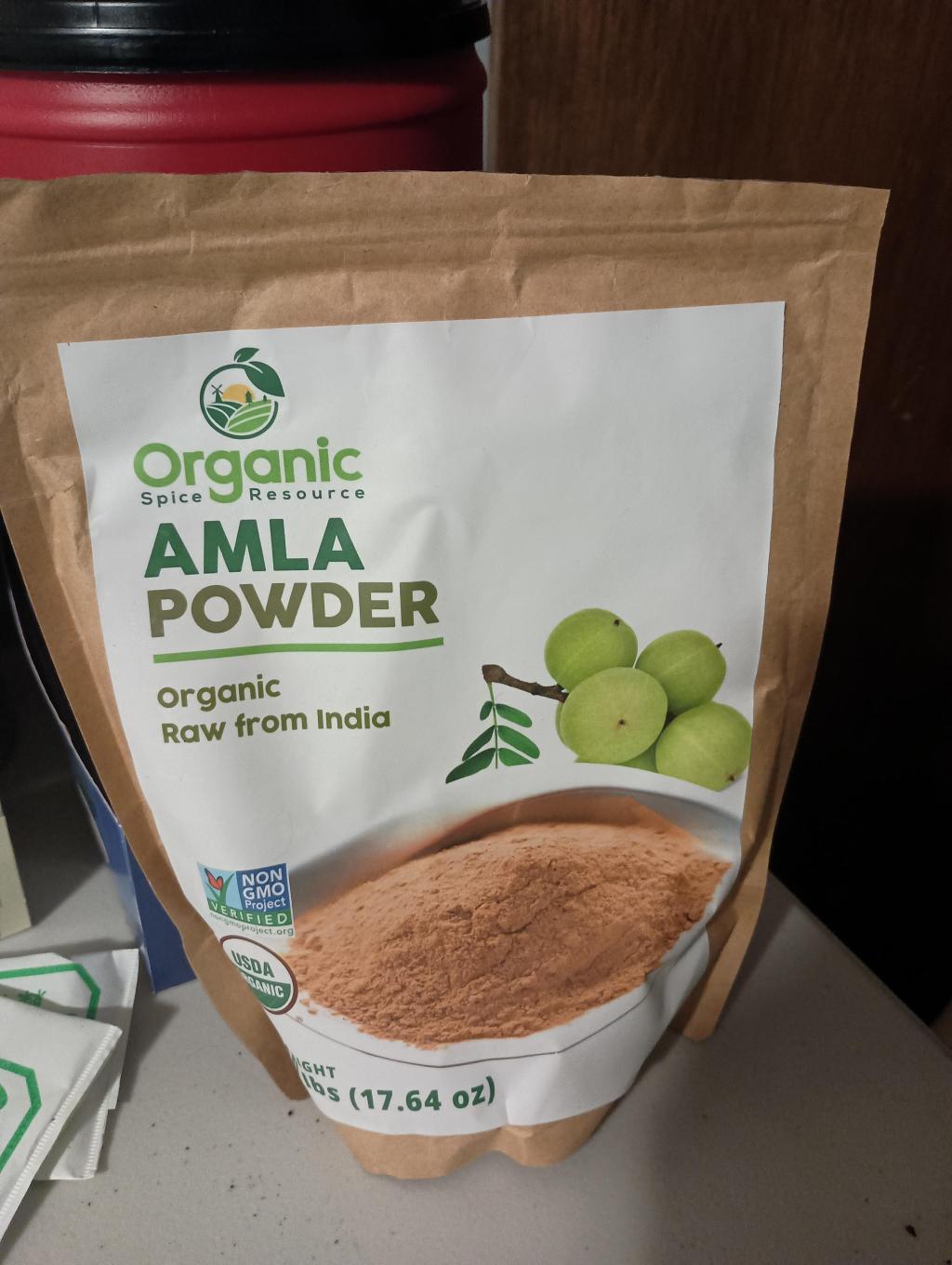
Here is the current recipe I use for Daily hair powdering, even if I don’t apply literally daily.
- Wheat flour (all purpose baking flour), 4/5ths total volume
- Amla
- Maca
- Ginger
- Cinnamon
Hope to share a more proper photo update of my hair length soon (long overdue)!

 Natalie's Hair, Horses and Harps
Leave a comment